

Tribology and Surface Interaction
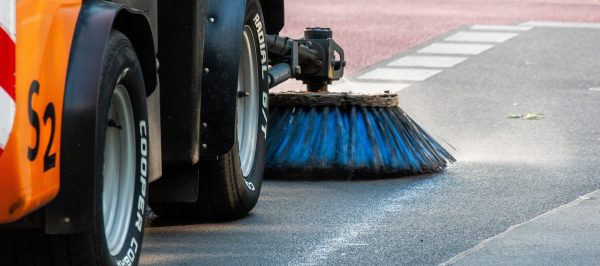
Cleaning a floor is a study in tribology—the science of interacting surfaces in relative motion. To effectively remove a contaminant from a floor substrate, one must overcome the adhesion forces holding the particles to the surface. These forces include Van der Waals forces, electrostatic attraction, and capillary bridging. The choice of cleaning method—mechanical, chemical, or thermal—depends on the surface energy of the floor and the chemical composition of the soil.
The Physics of Vacuum Suction and Airflow
Vacuum cleaners rely on Bernoulli’s principle to create a pressure differential. By creating a low-pressure area inside the machine, the higher atmospheric pressure outside forces air (and the debris suspended within it) into the intake. The efficiency of this process is measured by “Air Watts” or “CFM” (Cubic Feet per Minute). On carpeted surfaces, mechanical agitation is required to break the physical “interlock” between the soil and the twisted fibers of the rug, which is why a motorized brush roll is essential for soft surfaces but can be detrimental to hard ones.
Capillary Action and Surfactant Displacement
When mopping, the primary mechanism of cleaning is a combination of chemical displacement and capillary action. A surfactant-based solution reduces the surface tension of the liquid, allowing it to penetrate the interface between the soil and the floor. Through a process called “roll-up,” the oil-loving tails of the surfactant molecules surround the soil, lifting it into the aqueous layer. The mop textile then utilizes capillary action to draw the contaminated liquid up into the fibers of the cloth, effectively removing it from the substrate.
Coefficient of Friction and Safety
A critical scientific aspect of floor cleaning is the Coefficient of Friction (CoF). Over-cleaning or using the wrong wax-based products can lead to a surface that is “too slick,” increasing the risk of slips and falls. Conversely, residue build-up from improper rinsing can increase the “tackiness” of the floor, which actually increases the rate of soil re-deposition. Maintaining a floor at its engineered CoF requires the removal of both particulate matter and oily films without leaving behind surfactant residues.
The Impact of Pore Geometry in Tile and Stone
Hard surfaces are rarely as flat as they appear to the naked eye. Under a microscope, materials like ceramic tile, grout, and natural stone have complex pore geometries. Standard mopping often fails on these surfaces because the mop head only touches the “peaks” of the surface, while the soil accumulates in the “valleys” (the pores). Effective removal in these cases requires high-pressure extraction or specialized brushes that can achieve mechanical penetration of the surface topography, ensuring that the chemical cleaners reach the bottom of the pores to emulsify the trapped soils.